How Many Amps Does Your Window AC Use?
Struggling to figure out how much power your window AC uses? You’re not alone—many people worry about energy bills and safety when running their units.
Your window AC’s amp draw depends on its wattage and voltage. Most units run between 500 and 1,500 watts, which means they typically draw about 4 to 13 amps on a standard 120V outlet.
Larger or more powerful models tend to use more amps, especially during startup.
To stay safe and efficient, it’s important to understand your AC’s specs and how home wiring affects its performance. Keep exploring to learn how to optimize your unit’s power use.
Key Takeaways
- Divide the AC’s wattage by 120V to estimate its amp draw.
- Check the unit’s label or manual for specific voltage and current ratings.
- Startup currents are higher, so consider both running and startup amp ratings.
- A typical window AC uses between 4 to 15 amps depending on size and power.
- Using a multimeter or power meter gives you a precise measurement of the actual amp draw.
How Much Amp Draw Does a Typical Window AC Use?
Have you ever wondered how much current your window AC actually draws? The key is understanding the power ratings and doing some simple math.
Most window air conditioners list their power in watts, usually between 500 and 1,500 watts. To find out the amps, just divide the wattage by the voltage—usually 120 volts in the US.
Most window ACs range from 500 to 1,500 watts; divide wattage by 120 volts to find the amps.
For example, a 1,200-watt unit on a 120-volt circuit pulls about 10 amps (1,200 ÷ 120 = 10). Keep in mind, startup currents are often higher than the running ones, so the initial amp draw might spike.
Knowing the power ratings helps you estimate how much current your AC uses, which is important for making sure your circuit can handle the load. This way, you can prevent overloads and keep everything running safely.
What Is the Amp Rating on Your Window AC?
The amp rating on your window AC tells you the maximum current it can safely draw while running. This helps you understand how much electrical load your unit puts on your home’s wiring.
Knowing this rating is important to make sure your AC matches your outlet’s capacity. If the amp rating is close to or higher than your outlet’s limit, you risk overloading the circuit.
The amp rating also matters for cord safety. Using a cord not rated for the required amperage can cause overheating and even fires.
To keep everything running safely, always use a power cord designed for the amp draw listed on your window AC. Checking the rating and choosing the right cord are key steps for safe, efficient operation.
How Can You Calculate Your Window AC’s Power Consumption?
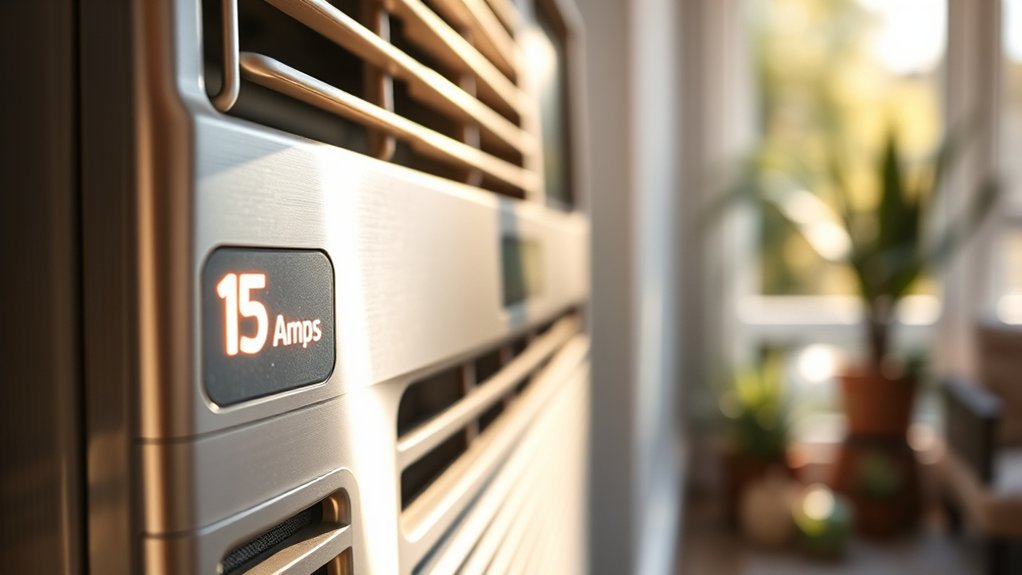
To figure out your window AC’s power consumption, start by checking its electrical specs—specifically the voltage (V) and current (A) it uses when running. You’ll usually find this info on the label or in the user manual.
Once you’ve got those numbers, it’s easy to calculate power: just multiply the voltage by the current (Power = V x A).
Keep in mind that different refrigerant types, like R-22 or R-410A, can impact how efficient your AC is and how much power it uses.
You might also notice compressor noise levels—louder sounds could mean your AC is working harder and consuming more energy.
Regularly reviewing your AC’s specs helps you understand its energy use and spot when it’s not running efficiently.
What Factors Affect Your Window AC’s Power Use?
Several key factors influence how much power your window AC consumes during operation. First, energy efficiency plays a major role. More efficient units use less power to cool the same space. Look for models with a high Energy Efficiency Ratio (EER) or SEER rating, as they measure how well your AC converts electricity into cooling.
The size of your unit also impacts power measurement. An undersized or oversized AC works harder and consumes more energy. Furthermore, the age and condition of your AC matter. Older units tend to be less efficient.
Settings like temperature and fan speed directly affect power use. Running your AC at lower temperatures or higher fan speeds increases energy consumption. In addition, external factors such as ambient temperature and insulation quality influence how hard your AC has to work.
All these factors affect overall power use. Understanding them helps you grasp what impacts your window AC’s energy consumption.
Is Your Window AC Energy-Efficient? Key Signs to Look For
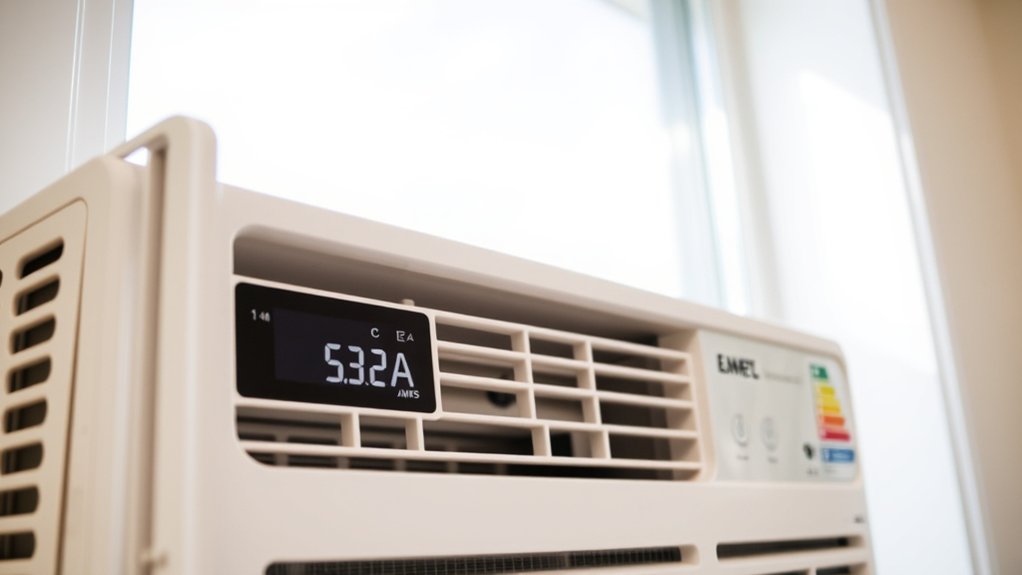
If your window AC is running all the time or just doesn’t seem to cool your room very well, it could be a sign that it’s not very energy-efficient. Sometimes, you might notice your energy bills shooting up unexpectedly, which isn’t great for your wallet. Also, if the unit feels hot to the touch, that’s a good indicator it’s struggling to do its job properly.
Keeping an eye out for these signs can help you figure out if it’s time to upgrade to a newer, more energy-efficient model. After all, a better unit can save you money in the long run and keep your space cooler and more comfortable.
Energy Consumption Indicators
Determining whether your window AC is energy-efficient starts with understanding its key consumption indicators. You can do simple energy audits using power meters to see how much electricity your unit uses during operation.
Look for these signs:
- High Energy Use: If your power meter shows consistently high wattage, your unit might be inefficient.
- Frequent Cycling: If your AC turns on and off often, it could be wasting energy trying to maintain the temperature.
- Unexpected Spikes: Sudden increases in energy consumption might mean there are issues that need a professional check.
Tracking these indicators helps you catch inefficiencies early. Regular energy audits can save you money and help your unit last longer, so you’re not paying for wasted power.
Efficiency Performance Signs
While keeping an eye on energy consumption indicators is useful, noticing specific signs of efficiency performance can give you quick insights into whether your window AC is working well.
One important sign is the indoor air quality. If it feels stale or humid even when the unit is on, your AC might be losing efficiency.
Also, pay attention to noise levels. A sudden increase or strange sounds can point to mechanical issues or declining performance.
A good window AC should run quietly and provide steady airflow, helping keep your indoor air fresh and comfortable.
If you notice more noise or poor air quality, it’s a good idea to check the filters, vents, or consider some maintenance.
These signs help you figure out if your unit is performing at its best or needs some attention.
How to Reduce Your Window AC’s Amp Draw and Save Energy
Want to cut down on your window AC’s amp draw and save some energy? Well, a good place to start is by keeping your unit well-maintained and clean. When it’s free of dust and dirt, it runs more efficiently and doesn’t work as hard – which means less power used.
Also, setting your thermostat to an optimal temperature makes a big difference. If it’s too cold or too warm, your AC ends up running more than necessary. Using energy-saving modes, if your unit has them, can help you cut back even more on those power numbers. Just a few simple tweaks can make your cooling more efficient and keep your energy bills in check.
Proper Unit Maintenance
Regularly cleaning or replacing your window AC’s filters is one of the easiest ways to cut down on its amp draw. Dirty filters block airflow, making the unit work harder and use more energy.
For vintage models, check the filters often because older units tend to collect dust faster. Also, make sure your refrigerant types are correct. Low or outdated refrigerants cause the compressor to work harder and use more amps.
To keep things running smoothly, inspect and clean filters monthly, and replace them if needed. Schedule regular professional checks for refrigerant levels and leaks.
Keep the coils clean and free of debris to improve heat exchange. Proper maintenance not only lowers amp draw but also helps your window AC last longer.
Optimal Thermostat Settings
Adjusting your thermostat to the right settings can really cut down on your window AC’s amp draw and save energy. Proper calibration makes sure your unit reacts accurately to temperature changes, which boosts efficiency.
Keep in mind that different people are sensitive to temperature. Setting it too low wastes power, while setting it too high makes the cooling less effective. Aim for a comfortable balance, around 78°F in summer, to minimize amp draw without sacrificing comfort.
Use the table below to get a better idea of your thermostat settings:
| Setting | Effect on Power Use | Recommended for |
|---|---|---|
| Too Cold | High amp draw | Max cooling |
| Slightly Low | Moderate use | Comfort and efficiency |
| Optimal | Lowest amp draw | Energy savings |
| Slightly High | Slight increase | Mild heat |
| Too High | Reduced cooling | Minimal energy use |
Proper calibration and knowing your temperature sensitivity can help you get the most out of your AC’s performance.
Use Energy-Saving Settings
To cut down on your window AC’s amp draw and save energy, using the energy-saving settings on your unit is key. Most models come with features made to boost efficiency and help lower your electricity bill.
To get the most out of these features:
- Set the fan to “auto” so it only runs when cooling is needed. This helps reduce unnecessary power use.
- Use the “eco” or “energy-saving” mode, which adjusts the compressor for better power efficiency.
- Program the thermostat to keep a comfortable temperature without overcooling, so your unit isn’t working harder than it needs to.
Following these tips can help decrease your AC’s amp draw, extend the life of your unit, and keep your energy bills lower.
Troubleshooting High Amp Draw in Your Window AC
A high amp draw in your window AC can signal underlying problems that need quick attention. One common cause is circuit overload, which happens when too many devices are sharing the same circuit, making the AC work harder.
Voltage fluctuations can also cause the amps to spike, forcing the compressor and fan to draw more current than usual. To troubleshoot, start by checking the circuit breaker; if it trips often, you might be overloading the circuit or have faulty wiring.
Next, measure voltage levels with a multimeter. Inconsistent readings suggest fluctuations that can strain your AC. Also, make sure your window unit is clean and free of debris, since dirty filters or coils increase resistance and lead to higher amp draw.
If these steps don’t fix the problem, it’s a good idea to call in an HVAC professional. Addressing circuit overloads and voltage issues quickly can prevent damage and keep your AC running efficiently.
Which Window AC Units Use Less Power? A Comparison Guide
Choosing a window AC unit that uses less power can save you money on energy bills and reduce strain on your electrical system. When comparing models, look for units with high energy efficiency ratings, like ENERGY STAR certification. These units usually consume fewer amps and work more efficiently.
Also, think about outdoor installation options. They can help reduce noise and improve heat dissipation, making your space more comfortable. Smaller units tend to use less power, but make sure they’re the right size for your room so the compressor doesn’t overwork.
Here are three key points to keep in mind:
- Look for energy-efficient models with high SEER ratings
- Consider proper outdoor installation for noise reduction
- Choose the right size to optimize power use
How Your Home Wiring Affects Your Window AC’s Performance
Your home wiring plays a key role in how well your window AC performs. If the wiring isn’t up to the task, your unit may not run efficiently or safely. Proper wiring ensures your AC gets enough power without risking circuit overloads.
Outdated or poorly installed wiring can cause frequent tripped breakers, reduced cooling, or even electrical hazards. To avoid this, check that your circuit can handle your AC’s amperage draw.
Upgrading your wiring or circuit breaker might be necessary for the best performance and safety. Here’s a quick comparison:
| Wiring Compatibility | Circuit Overload Risk |
|---|---|
| Properly rated wiring | Reduced lifespan of AC |
| Adequate amperage | Increased fire hazard |
| Fresh, undamaged wiring | Frequent tripped breakers |
| Correct grounding | Electrical shock risk |
Making sure your wiring matches your AC’s needs keeps your cooling system reliable and safe.
Why Knowing Your Window AC’s Amp Draw Matters for Safety and Costs
Understanding your window AC’s amp draw is important because it affects both safety and your electricity bills. Knowing this helps you avoid hazards like overheating or electrical fires that can happen if your unit draws too much current.
It also helps you stay within electrical codes, which set safe load limits for your home’s wiring and outlets. Monitoring your AC’s amp draw can prevent damage and keep everything running smoothly.
Key reasons to keep an eye on your AC’s amp draw include preventing overloads that could harm your wiring or cause fires. It also helps you avoid fines for electrical code violations. Plus, understanding your unit’s power use can help manage your energy costs better.
Frequently Asked Questions
How Do I Read My Window Ac’s Amperage on the Label?
You find your window AC’s amperage on the label by looking for the section marked “Amps” or “Current.” It’s usually a number with an “A” next to it.
This number shows the maximum current your unit might draw, which helps you understand energy efficiency and power use.
Knowing this allows you to compare different models and make sure your circuit can handle the load. This way, you reduce risks and keep your AC running smoothly.
Can a Higher Amp Draw Indicate a Faulty Unit?
A higher amp draw can be a sign that something’s wrong with your unit, which could pose electrical safety risks and lower energy efficiency.
If your window AC suddenly uses more amps than usual, it might have a compressor problem or an electrical component failure.
Keeping an eye on your unit’s amperage regularly helps catch issues early.
This way, you can ensure safe operation and keep your energy bills in check.
Always address abnormal readings quickly to avoid further damage and maintain safe, efficient cooling.
What’s the Typical Lifespan of a Window AC in Amps?
A typical window AC lasts about 10 to 15 years, depending on usage and maintenance. Over time, its energy efficiency declines, and it may draw more power, which can increase the amps it uses.
To keep your unit running smoothly, regularly clean the filters, ensure proper installation, and schedule professional checkups. Proper upkeep helps your AC operate efficiently, lowering unnecessary power use and preventing early breakdowns.
How Often Should I Check My Window Ac’s Power Usage?
You should check your window AC’s power usage monthly, or even weekly during peak summer. Imagine your energy efficiency slipping away like sand through your fingers. Staying vigilant helps catch rising power consumption trends early.
Regular checks guarantee your unit runs smoothly, saving you money and reducing energy waste. Don’t wait for your bills to scream at you. Monitor often to keep your AC’s performance optimized and energy-efficient year-round.
Does Using Extension Cords Affect My Window Ac’s Amperage?
Using extension cords can increase your window AC’s amperage load and pose safety risks. Poor extension cord safety, like using the wrong gauge or damaged cords, can cause overheating or power surges.
To prevent issues, avoid extension cords altogether or choose heavy-duty ones designed for high power. This helps prevent power surges and keeps your AC running safely and efficiently without risking electrical hazards.
Conclusion
Now that you know your window AC’s amp draw, imagine ignoring it—your wallet gets a workout, and your circuit breaker throws a tantrum. Think of it as giving your unit a high-five or a slap on the wrist, depending on your wiring’s mood.
Keep a close eye on those amps; otherwise, you might end up in a sitcom where your air conditioner’s power drama steals the show and your sanity. Monitoring your AC’s amp usage is key to keeping things running smoothly and saving money.