Store Your Window AC Unit for Winter in 7 Simple Steps
Many people struggle with storing their window AC units properly for winter. It’s easy to feel overwhelmed by the process or worry about damaging the unit. But don’t worry—you’re not alone, and with a few simple steps, you can keep your AC in great shape for next season.
To store your window AC unit for winter, start by cleaning and servicing it, removing dirt, mold, and filters. Next, select a dry, cool indoor space like a basement or closet, and make sure the unit is completely dry before storing.
Cover and seal the AC with a breathable cover, ensuring all openings are protected. Inspect everything before reusing it next season. Follow these steps closely to keep your unit in top shape.
Learn more for a perfect winter storage.
Key Takeaways
- Clean and thoroughly dry the unit, including filters, coils, and exterior surfaces, to prevent mold and rust during storage.
- Remove batteries and disconnect the unit from the power source for safety and to avoid internal damage.
- Pick a dry, cool, and well-ventilated indoor space like a basement or closet to store your AC unit.
- Cover the unit with a breathable cloth or protective cover, making sure to seal all openings to keep out dust, pests, and moisture.
- Check and secure internal components, then confirm the unit is dry and well-protected before sealing it up for winter.
Why Proper Storage Matters for Your Window AC
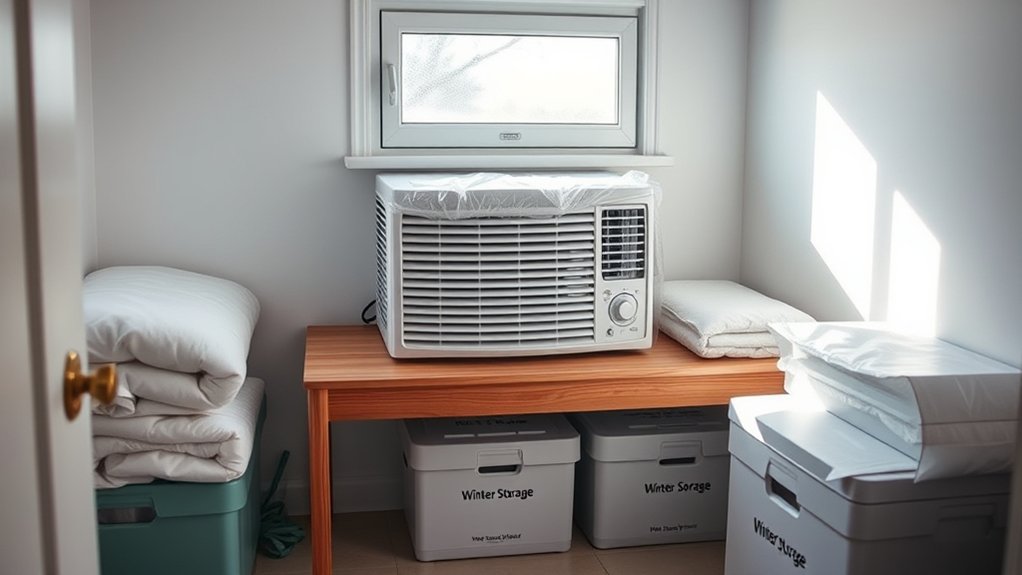
Proper storage is essential to keep your window AC unit in good condition during the off-season. When you store it correctly, you help maintain its energy efficiency, ensuring it runs smoothly when summer returns.
Proper storage prevents corrosion, rust, and damage caused by exposure to moisture and pests. It also reduces the risk of mold and unpleasant odors developing inside the unit.
Seasonal maintenance before storage, like cleaning and inspecting the components, boosts the unit’s lifespan and performance. Taking these steps makes sure your AC stays efficient and ready to use, saving you money on repairs or replacements later.
Additionally, storing your unit properly helps avoid accidental damage from falling or mishandling. Good storage practices protect your investment, keep it in top shape, and make seasonal transitions easier.
Ultimately, proper storage is a simple but effective way to prolong your AC’s life and keep it running efficiently year after year.
How to Clean and Service Your Window AC Before Storage
Before you put your window AC away for the season, it’s a good idea to give the air filters a thorough cleaning. Dust and debris can build up over time, and if they’re not removed, they might lead to mold or unpleasant odors later on. So, take a few minutes to give those filters a good wipe-down or wash.
Next, make sure to drain any leftover water from the unit. Standing water can cause damage or even mold growth if it’s left inside. Once that’s done, it’s a good idea to protect the internal parts from any potential damage while it’s stored away. Covering the unit or placing it in a dry, safe spot can help keep everything in tip-top shape.
Cleaning the Air Filters
To keep your window AC unit in good shape during the off-season, start by cleaning the air filters thoroughly. Dirty filters can reduce energy efficiency, making your unit work harder and use more power.
Remove the filters and gently wash them with warm water and mild detergent, making sure to remove dust, dirt, and debris. Rinse well and let them air dry completely before putting them back.
Clean filters improve airflow, helping your AC run quietly and reducing noise during use. Regular maintenance like this not only keeps your unit performing well but also extends its lifespan.
Keeping filters clean is a simple, effective step to prepare your window AC for winter storage and ensure it runs smoothly when you need it again.
Draining and Protecting Components
When preparing your window AC unit for winter storage, it’s important to drain any remaining water to prevent damage from freezing or corrosion. Carefully remove the drain plug or tilt the unit to let the water escape, making sure no moisture is left behind.
This step helps keep your unit energy-efficient for the next season and prevents mold growth. While you’re at it, check and protect the components like fan blades and coils by cleaning and applying protective coatings if needed.
Properly drained and protected units run more quietly and efficiently when you restart them. Taking these simple precautions reduces noise caused by debris or corrosion and keeps your AC in good shape for the next cooling season.
Where to Store Your Window AC During Winter
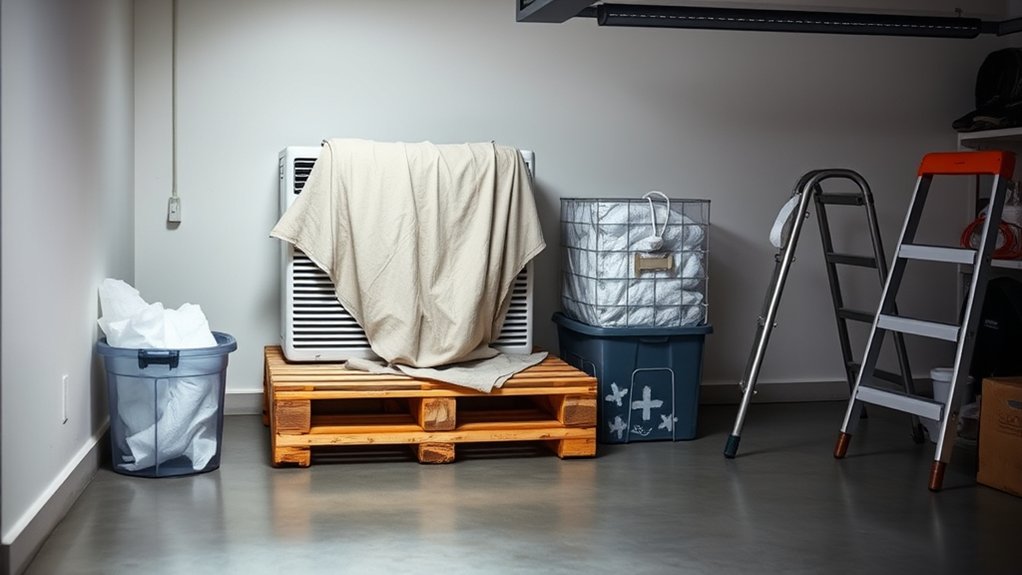
Finding a suitable spot to store your window AC unit during winter is essential to keep it safe and in good shape.
For indoor storage, pick a dry, cool, and clean area away from direct sunlight, moisture, and temperature extremes. This helps protect the unit during the seasonal changeover and prevents damage from humidity or freezing temperatures.
A basement, closet, or garage often works well if it’s well-ventilated and not prone to flooding or pests. Just avoid damp or cluttered spaces, since moisture can cause rust or mold.
Make sure the unit is clean and dry before storing it. Consider covering it with a breathable cloth or plastic to keep dust off.
Proper storage extends your AC’s lifespan and ensures it’s ready to go when warm weather returns. Taking these steps helps safeguard your investment through the off-season.
How to Protect Your AC During the Off-Season
Even if your window AC unit is stored properly, taking extra steps to safeguard it during the off-season helps keep it in top shape. Start with seasonal maintenance by cleaning or replacing filters, removing debris, and inspecting for any damage. This prevents mold growth and keeps the unit working efficiently.
Next, check the electrical connections and make sure they’re secure to avoid problems later. Lubricate moving parts if needed, following the manufacturer’s instructions. Proper storage in a dry, frost-free space prevents rust and corrosion.
Consider unplugging the unit to save energy and reduce electrical hazards. Maintaining your AC during the off-season not only extends its lifespan but also boosts energy efficiency when you need it again.
Regular upkeep reduces the chance of costly repairs and helps your unit run smoothly. This saves you money and hassle in the long run.
How to Cover and Seal Your AC for Winter
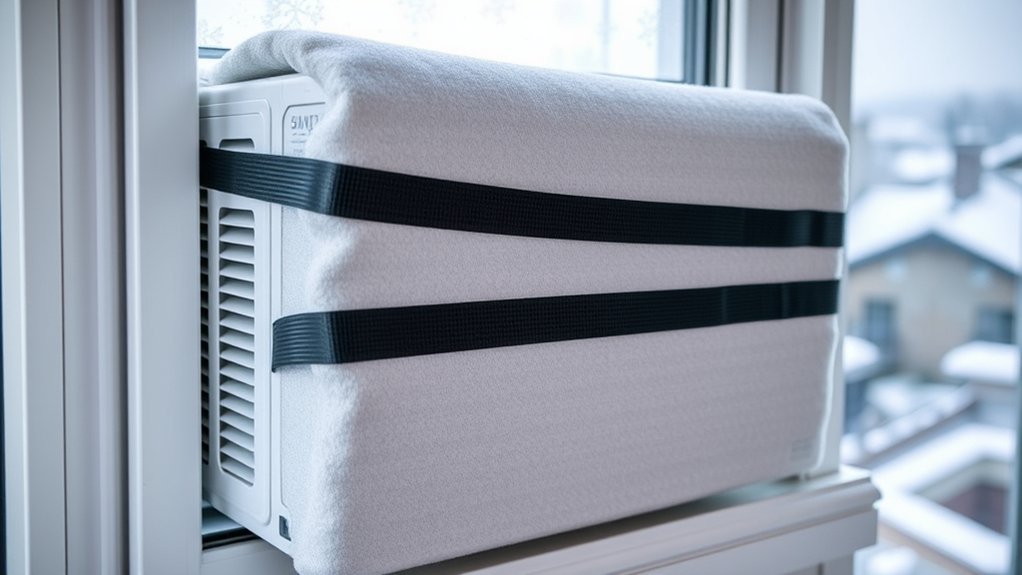
Sealing and covering your window AC unit is essential to protect it from winter weather and debris. Properly sealing the unit prevents drafts, which helps maintain indoor air quality by reducing the entry of cold air, moisture, and pests.
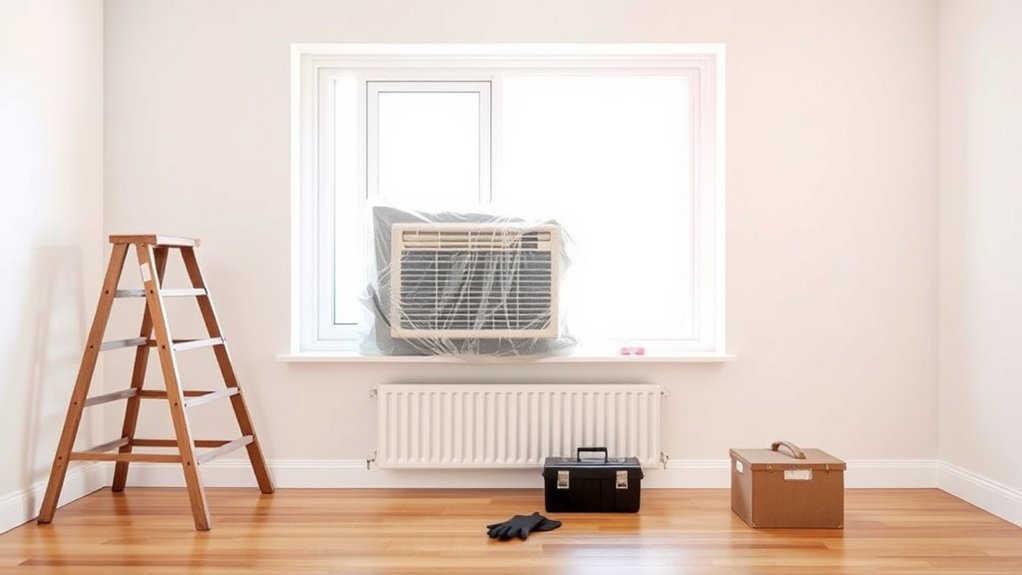
Using weatherproof covers or plastic sheeting, make sure all openings are tightly sealed, especially around the vents and gaps. This shields the unit from snow, ice, and debris while preserving its energy efficiency.
Before covering, clean the unit thoroughly to remove dirt and debris, preventing mold and mildew buildup under the cover. Secure the cover firmly to prevent it from blowing away in winter storms.
Taking these steps guarantees your AC stays in good shape, minimizes damage risk, and helps maintain a healthier indoor environment for when you’re ready to use it again.
How to Inspect Your AC Before Reusing It Next Summer
Before reinstalling your window AC unit for summer use, it’s a good idea to inspect it for any damage or wear. Check the filters and clean or replace them if they’re dirty. This helps improve energy efficiency and airflow.
Take a look at the coils for dirt, mold, or corrosion. A clean coil makes your unit run more efficiently and can help save on energy costs. Listen for any unusual noises when it’s running; loud sounds might mean loose parts or motor issues that need fixing before summer.
Inspect coils for dirt, mold, or corrosion to improve efficiency and reduce energy costs.
Check the fan blades for damage or debris. Make sure they spin smoothly and quietly. Tighten any loose screws or mounting brackets to prevent vibrations that cause noise.
Finally, verify that all electrical connections are secure and free of corrosion. Doing these simple checks will help your AC run better, quieter, and last longer—so you stay cool all summer long.
Common Mistakes to Avoid When Storing Your Window AC
One mistake people often make is skipping a proper cleaning before storing their window AC. If you don’t clean it thoroughly, mold and debris can build up over the winter, which isn’t great for the unit or your health.
Another thing to watch out for is forgetting to remove the batteries from the remote or control panel. If batteries are left inside, they can leak and cause damage to the electronics.
And don’t forget to cover the unit properly. Leaving it exposed to dust and moisture can lead to corrosion and other issues down the line. Taking these steps can help keep your AC in good shape for next season!
Ignoring Thorough Cleaning
Neglecting thorough cleaning before storing your window AC can lead to problems down the line. Skipping this step can cause mold growth, bad odors, and damage to internal parts.
Not maintaining the filters allows dirt and debris to build up, which reduces efficiency and increases the risk of mold. To keep your unit in good shape, make sure you:
- Remove and wash the filters thoroughly.
- Clean the evaporator and condenser coils.
- Wipe down the exterior and vents.
- Drain and dry the drain pan to prevent mold.
If you skip these steps, dirt and moisture can get trapped, leading to corrosion or mold during storage. Proper cleaning helps protect your AC and makes sure it’s ready to go when warmer weather comes back.
Always remember, a detailed cleaning before winter storage is key to keeping your unit in top shape.
Forgetting to Remove Batteries
Leaving batteries inside your window AC unit during storage is a common mistake that can cause serious issues. Batteries left in can leak acid, damaging internal components and leading to corrosion.
To prevent this, always remove the batteries before storing your unit. Also, make sure you’ve unplugged the unit from the power source. This step helps protect against electrical problems and reduces the risk of short circuits or fires.
Forgetting to remove batteries might seem minor, but it can lead to costly repairs or the need to replace parts later. Take the time to remove all batteries and disconnect the electrical supply to keep your AC in good shape through the winter months.
Neglecting Proper Covering
Have you thought about how important it is to protect your window AC unit when you’re storing it? Skipping proper covering can lead to damage and make cleaning or maintenance harder later on.
To keep your unit in good shape during seasonal storage, follow these simple steps:
- Use a weather-resistant cover to protect it from dust, dirt, and moisture.
- Make sure the cover fits snugly so debris doesn’t get inside.
- Avoid plastic bags, as they can trap moisture and cause rust.
- Clean off any dirt or debris before covering to prevent mold growth.
Not covering your unit properly exposes it to the elements, risking rust and damage. Taking the time for proper seasonal prep can help your window AC last longer and save you from future repairs.
Frequently Asked Questions
How Long Can I Store My Window AC Safely?
You can safely store your window AC unit for winter for about 6 to 8 months, but it really depends on proper seasonal maintenance and storage precautions.
Before storing, make sure to clean the filter and coils thoroughly, drain any water, and dry the unit completely.
Use a sturdy, moisture-proof cover, and store the unit in a cool, dry place.
Following these steps will help keep your AC in good shape for next season.
Can I Store My AC Outdoors During Winter?
Storing your AC outdoors during winter is like leaving your favorite book in the snow—unprotected and vulnerable. It’s better to avoid outdoor storage because harsh weather can damage your unit.
If you really have to, use a sturdy winter insulation cover and raise it off the ground to prevent moisture buildup. But the safest choice is to store your window AC indoors, where it’s protected from the elements and winter’s chill.
What Temperature Should Storage Areas Be?
You should store your AC unit in a cool, dry place with temperatures between 50°F and 70°F. Proper insulation is important to prevent temperature fluctuations, which can cause condensation and moisture buildup.
Maintaining this temperature range helps prevent moisture damage and keeps your unit dry. Keep the storage area well-ventilated and avoid extreme cold or heat, as these conditions can harm the unit’s components over winter.
Should I Drain Refrigerant Before Storing?
Yes, you should drain the refrigerant before storing your window AC unit. Proper refrigerant maintenance helps prevent leaks and damage during winter.
Before storage, perform a system inspection to make sure there are no issues. If you’re unsure, it’s a good idea to consult a professional.
Draining the refrigerant reduces pressure and minimizes the risk of corrosion or damage. This helps keep your unit in good shape for when you’re ready to use it again.
How Often Should I Check the AC During Storage?
You should check your AC once a month during storage. While inspecting, do a quick power washing of the unit to remove dust and debris. This helps prevent pests from nesting.
Also, look for signs of mold or pests and take action if needed. Regular checks keep your AC in good shape and make it easier to reinstall in spring.
Conclusion
Properly storing your window AC guarantees it lasts longer and performs better when summer returns. Did you know neglecting proper storage can reduce your unit’s lifespan by up to 20%?
By following these simple steps, you protect your investment and avoid costly repairs. Take the time now to clean, cover, and store your AC correctly—your future self will thank you.
Keep your unit in top shape for many seasons to come!